
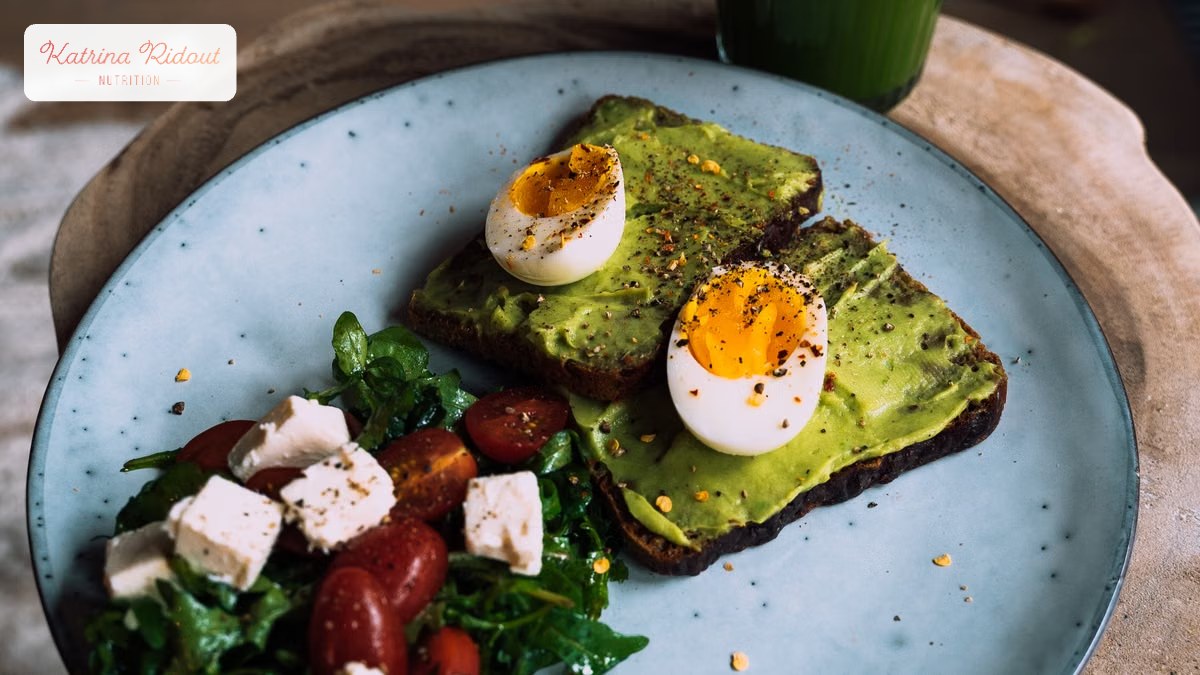
Quick answer: Before trying to conceive, eat a Mediterranean-style pattern: plenty of vegetables, fruit, legumes, whole grains, nuts, olive oil and 2–3 serves of low-mercury fish a week. Start a supplement with at least 400 mcg folic acid and 150 mcg iodine at least one month before conception, as Australian guidelines recommend, and stop alcohol. Aim to start 3 months ahead. That’s roughly how long eggs and sperm take to mature.
By Katrina Ridout, Accredited Practising Dietitian (APD), Brisbane. Reviewed September 2026.
Why the three months before conception matter
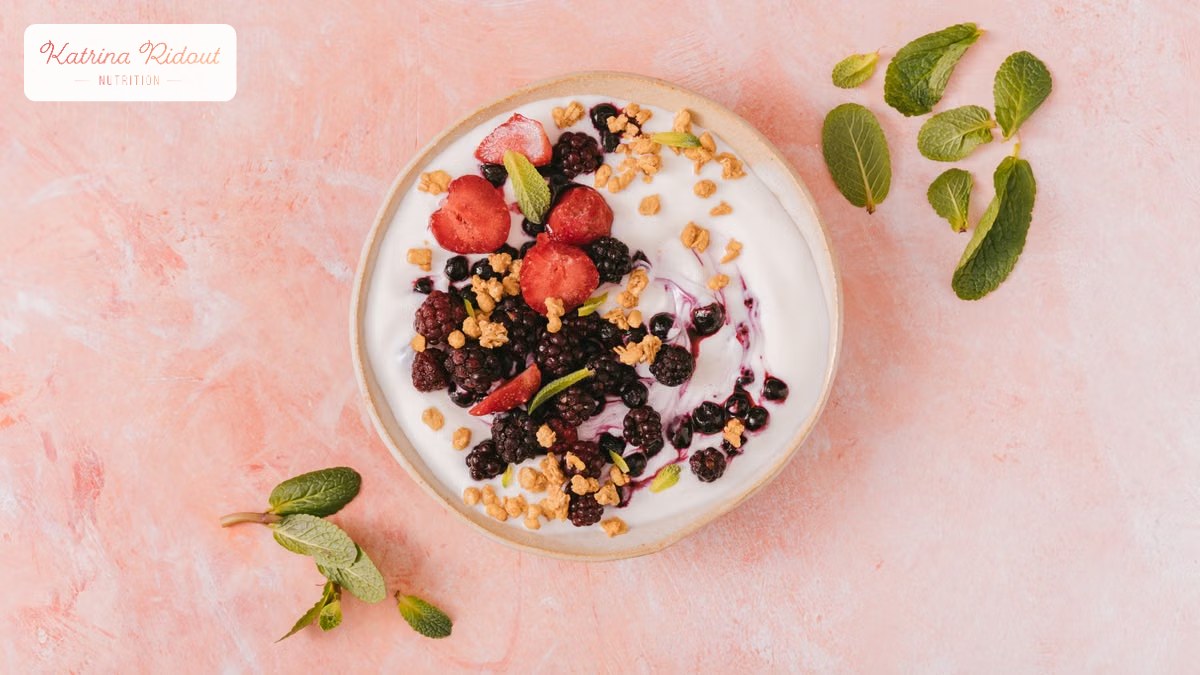
Eggs go through their final stage of development over about 100 days, and sperm take around 74 days to form. That makes the few months before you start trying a useful window. The research on diet and fertility is mostly observational. It points to overall eating patterns rather than any single “fertility superfood”.
The eating pattern the evidence supports
- Vegetables and fruit: aim for 5 serves of vegetables and 2 of fruit daily, with a variety of colours.
- Legumes and whole grains: lentils, chickpeas, oats and wholegrain bread supply fibre, folate and slow-release carbohydrate.
- Healthy fats: extra virgin olive oil, avocado, nuts and seeds.
- Fish: 2–3 serves a week of low-mercury fish such as salmon, sardines or tinned light tuna. Food Standards Australia New Zealand advises limiting shark (flake), swordfish and marlin.
- Protein variety: eggs, dairy or calcium-fortified alternatives, lean meat and plant proteins.
- Fewer ultra-processed foods: less processed meat, sugary drinks and highly refined snacks.
Supplements to start now
- Folic acid: at least 400 mcg daily from at least one month before conception through the first trimester. Some women need a higher dose, such as those with diabetes, a higher BMI or a family history of neural tube defects. Ask your GP.
- Iodine: 150 mcg daily when planning, pregnant and breastfeeding (NHMRC).
- Vitamin D and iron: only if a blood test shows you need them. Your dietitian or GP can check.
A dietitian writes an individualised supplement plan, so you don’t double up or miss something.
What to limit or avoid
- Alcohol: Australian guidelines say not drinking is safest when planning a pregnancy.
- Caffeine: keep it moderate. In pregnancy the limit is 200 mg a day, about two cups of instant coffee.
- Smoking and vaping: both reduce fertility for women and men.
Don’t forget your partner
Sperm quality responds to diet too. The same pattern, plus not smoking and keeping alcohol low, supports male fertility. See our guide to male fertility nutrition.
When to see a fertility dietitian
A one-on-one plan is worth it if you have PMOS (previously called PCOS), endometriosis, diabetes or coeliac disease, if you’re preparing for IVF, or if you’ve been trying for more than 12 months (6 months if you’re over 35). Katrina Ridout is an Accredited Practising Dietitian who sees clients in Brisbane and by telehealth Australia-wide. Medicare rebates are available for eligible patients on a GP Chronic Condition Management Plan. How to choose a fertility dietitian.
FAQ
How long before trying to conceive should I change my diet?
Ideally 3 months, because that’s how long eggs and sperm take to mature. Start folic acid and iodine at least one month before.
Is there a specific fertility diet?
No single diet is proven. Current evidence supports a Mediterranean-style pattern.
Should I take a prenatal vitamin before conceiving?
Yes. Choose one with at least 400 mcg folic acid and 150 mcg iodine, started at least one month before conception.
Kat works one to one on fertility and preconception nutrition, for women and men, in person in Milton, Brisbane, or by telehealth anywhere in Australia. See how her fertility and preconception service works.
Sources
- NHMRC, Iodine supplementation for pregnant and breastfeeding women (2010)
- Department of Health and Aged Care, Pregnancy Care Guidelines: folic acid and iodine
- NHMRC, Australian Guidelines to Reduce Health Risks from Drinking Alcohol (2020)
- FSANZ, Mercury in fish
- Gaskins AJ & Chavarro JE, Diet and fertility: a review. Am J Obstet Gynecol (2018)