Somebody asked me this week whether she needed to throw out her face serum. She was eleven weeks pregnant, she had read something about retinol, and she had spent two days quietly worried about a bottle in her bathroom cabinet.
That is where most vitamin A questions in pregnancy actually start. Not with a nutrient target, but with a worry about having had too much of something. And unlike most nutrients in pregnancy, vitamin A is one where that worry is pointed in the right direction, because it is one of the few where the ceiling matters more than the target.
So here is the whole picture, with the Australian numbers, and where vitamin K fits alongside it.
How much vitamin A you actually need
The NHMRC Nutrient Reference Values set the recommended dietary intake for vitamin A in pregnancy at 800 micrograms of retinol equivalents a day for women aged 19 to 50, and 700 micrograms for women aged 14 to 18. Outside pregnancy the figure for adult women is 700 micrograms. While breastfeeding it rises to 1,100.
So pregnancy lifts the requirement, but only modestly: an extra hundred micrograms a day on a base of seven hundred. That is a change you would not notice, and it is not the part of this nutrient that needs managing.
The number that matters is the ceiling, not the target
Vitamin A also has an Upper Level of Intake, which most nutrients in pregnancy do not. For adults from nineteen it is 3,000 micrograms a day, and it is set lower, at 2,800 micrograms, for the fourteen to eighteen band.
Two things about that number are worth understanding properly, because they are the two things that get lost.
The first is what the limit was set against. The NHMRC documentation is explicit that the critical adverse event used to set the upper level for women of childbearing age was teratogenicity, which is the capacity to affect the development of a baby. That is the reason this nutrient has a ceiling at all.
The second is what the limit applies to. It applies to preformed vitamin A, also called retinol, which is the form found in animal foods and in supplements. It does not apply to beta-carotene from food. Those are not interchangeable, and treating them as if they were is how people end up frightened of a bowl of pumpkin soup.
In practice, the only realistic routes to the ceiling are a supplement carrying preformed vitamin A, more than one supplement carrying it at the same time, or liver. Ordinary eating does not get you there.
Which brings me to the thing actually worth doing: read the label on everything you are taking, and add up the vitamin A across all of it. A prenatal multivitamin, a separate fish oil and something a relative recommended can stack without anyone intending it to, and nobody is holding the total. If you are unsure what the total comes to, that is a reasonable question for your pharmacist, your GP or an Accredited Practising Dietitian, and it takes about four minutes to answer. I have written separately about what Australian prenatal supplements tend to miss, which is the same label-reading habit pointed at a different nutrient.
Liver and pate: the one food Australian guidance says to leave
Liver is the exception to everything I just said about food, and Australian guidance is unambiguous about it. The Better Health Channel puts it plainly: although liver is high in folate, it is not recommended for women who are, or could be, pregnant, because of its high vitamin A content.
That covers liver itself and the things made from it, so pate, liverwurst and braunschweiger sit in the same place. It is a short list and an easy one to follow, and it is genuinely the only food in the vitamin A conversation that needs a line drawn around it.
Worth saying clearly, because this is where the anxiety usually lands: if you ate pate before you knew you were pregnant, a single serving is not the scenario the upper level is built around. Mention it at your next appointment if it is sitting on your mind, and then let it go.
Retinol in your skincare
This is the question I get most, and it has a better answer than the internet suggests.
MotherSafe, the medicines and pregnancy service at the Royal Hospital for Women in Sydney, states that retinol in skin care products is poorly absorbed through the skin and is not anticipated to be a concern in pregnancy.
Prescription oral retinoid medications are an entirely different matter and are managed by the doctor who prescribes them, with their own requirements. That is a conversation with your prescriber, not a conversation about serums.
So the over-the-counter bottle in your bathroom is not the thing to spend your worry on. If you would rather not use it, that is a perfectly reasonable choice to make for your own comfort. It is simply not one Australian guidance requires of you.
Beta-carotene is a different thing entirely
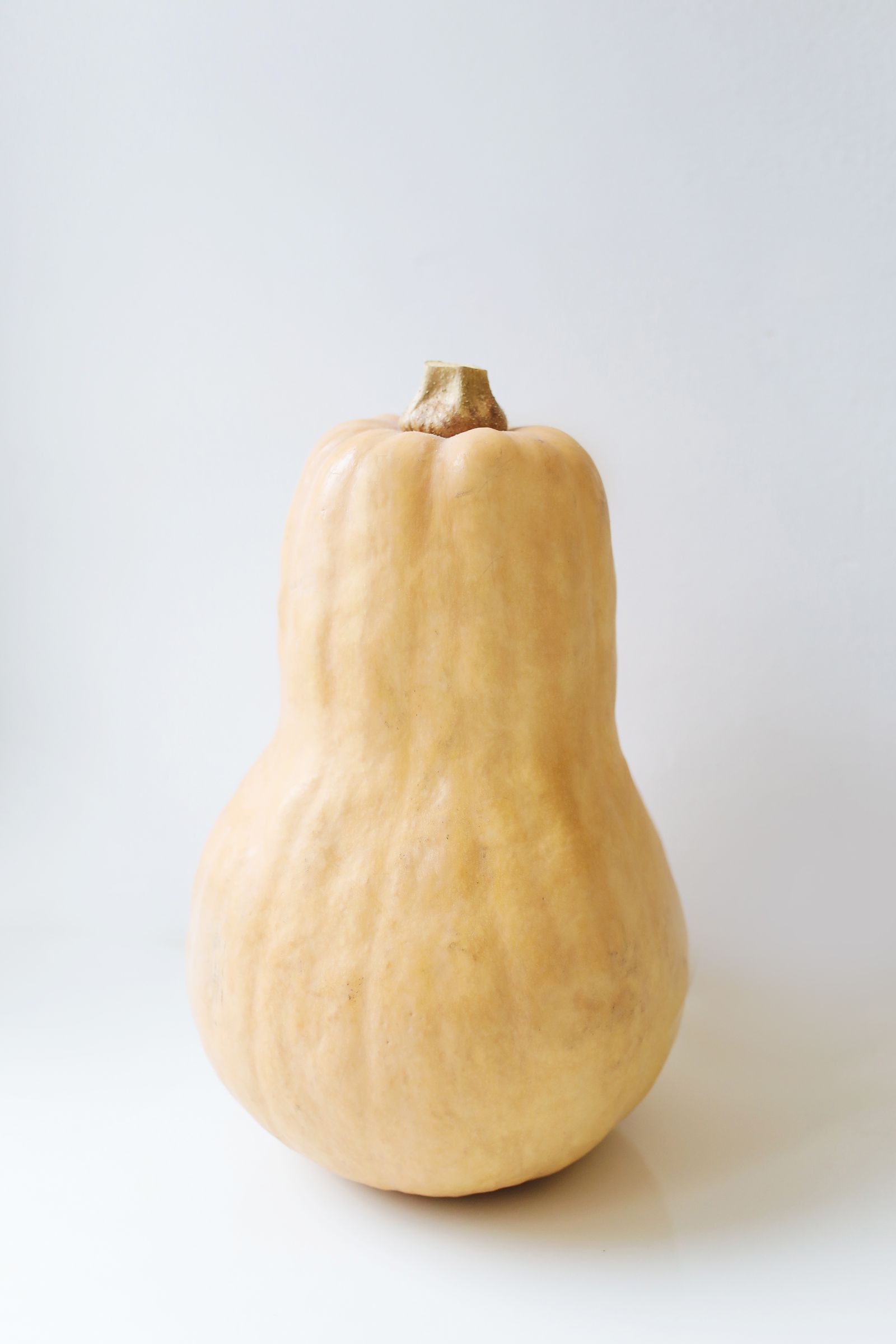
Beta-carotene is the plant form. The upper level of intake does not apply to it.
Beta-carotene is the plant form, the orange pigment in pumpkin, sweet potato, carrot and dark leafy greens, and your body converts what it needs. MotherSafe states it directly: beta-carotene is the plant form of vitamin A and is not associated with birth defects.
That is why the upper level sits on preformed vitamin A and not on the vegetables. It is also why, when someone asks me how to cover vitamin A in pregnancy without worrying, the answer is food. MotherSafe says the same: the best way to get adequate vitamin A in pregnancy is from food such as meat, fish, leafy vegetables and dairy products.
Add before you subtract. For this nutrient, that means orange vegetables and greens on the plate, rather than another capsule in the cupboard.
Where vitamin K actually fits
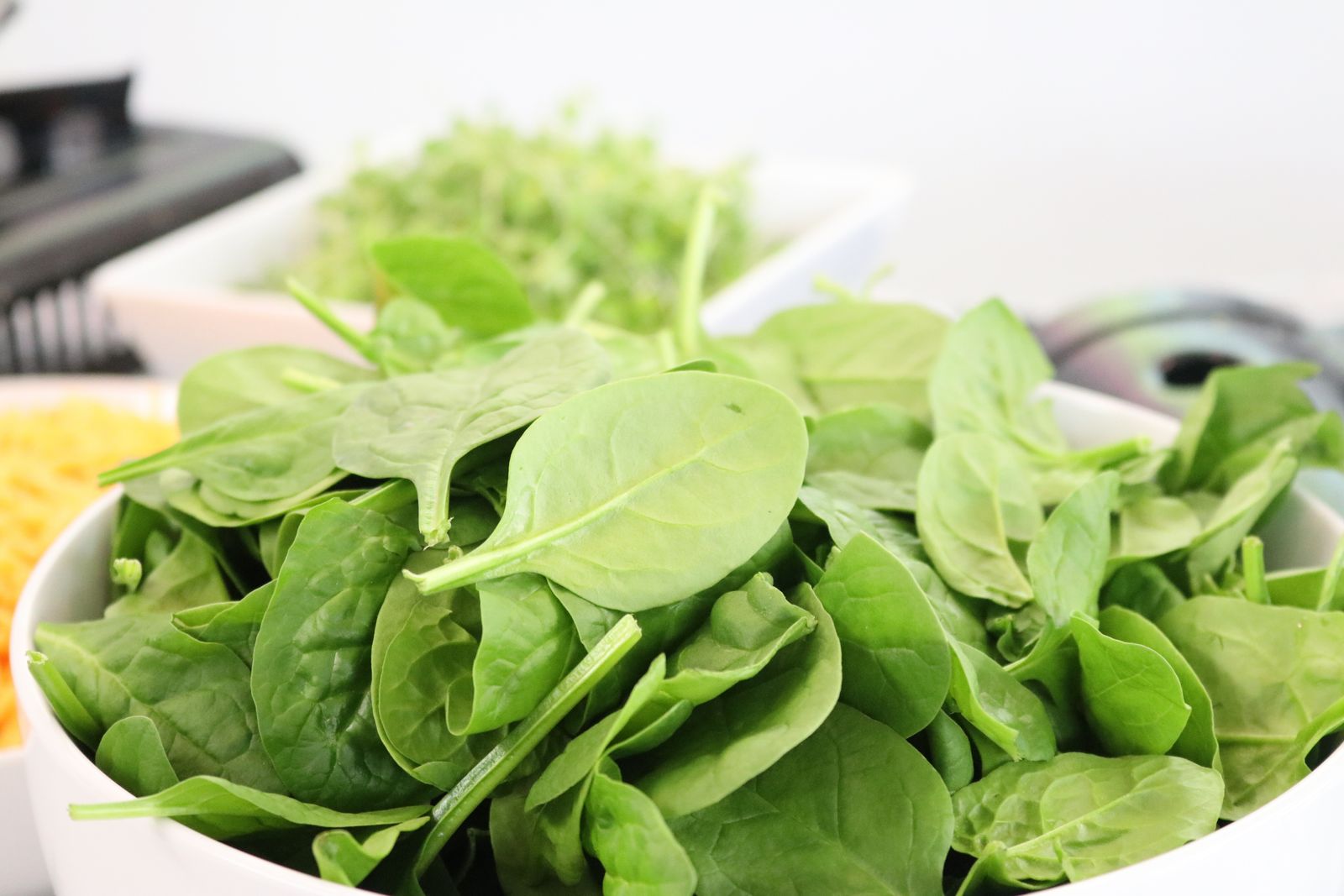
Green leafy vegetables cover the vitamin K requirement, which does not change in pregnancy.
Vitamin K gets grouped with vitamin A in a lot of searching, and the two could hardly be less alike.
The NHMRC sets an Adequate Intake for vitamin K of 60 micrograms a day for adult women, and it does not change in pregnancy or while breastfeeding. No Upper Level of Intake was set at all, because, in the NHMRC’s words, no adverse effects have been associated with vitamin K consumption as food or supplements in humans or animals.
So there is no ceiling to watch and no increase to make. Green leafy vegetables cover it, which the same plate is already doing.
One point of clarification, because it is where most vitamin K searching is really heading. The vitamin K given to babies shortly after birth is a separate matter from what you eat while pregnant, and the NHMRC Adequate Intake for infants is written on the assumption that babies also receive it. It is not something your diet during pregnancy is meant to replace, and the decision sits with you and your midwife, obstetrician or GP. Ask them about it before the birth rather than on the day, when there is more going on.
What to ask at your next appointment
Three questions, which is a realistic number to remember.
What is the total vitamin A across everything I am taking, and is any of it preformed vitamin A or retinol?
Is there anything in my own history that changes how much vitamin A I should be having?
What is the plan for vitamin K for the baby after the birth?
None of those takes long, and all three are better answered by someone looking at your actual situation than by a search result.
One tray, built around the food form
Roast pumpkin, chickpea and spinach tray bake. One tray, about fifty minutes, and it reheats.
What you need. 800g butternut pumpkin, peeled and cut into three centimetre pieces. One red onion, cut into wedges. Two tablespoons olive oil. One teaspoon ground cumin. One teaspoon sweet paprika. One 400g tin of chickpeas, drained and rinsed. Two cloves of garlic, sliced. 120g baby spinach. 200g Greek yoghurt. The juice of half a lemon. Salt and pepper.
What you do. Heat the oven to 200 degrees. Toss the pumpkin and onion with the oil, cumin and paprika on a large tray and roast for twenty five minutes. Add the chickpeas and garlic, turn everything over and roast for another ten to fifteen minutes, until the pumpkin is tender and the chickpeas have crisped at the edges. Pile the spinach onto the hot tray and fold it through until it has just wilted. Stir the lemon juice into the yoghurt and spoon it over. Serves four.
The dietitian’s note. Pumpkin is one of the richest everyday sources of beta-carotene, which is exactly the form of vitamin A the upper level does not apply to. So this is the version of vitamin A you can put on a plate without counting anything. The chickpeas bring fibre and some iron, the spinach brings folate and vitamin K, and the yoghurt brings calcium. Designed with pregnancy in mind, as general education rather than advice for your particular situation.
Working with me
I am Katrina Ridout, an Accredited Practising Dietitian working in fertility, pregnancy and postpartum nutrition. I am a pregnancy dietitian in Brisbane and I consult across Australia by telehealth, so where you live does not decide whether you can get this looked at properly.
Most of what I do in a first appointment is subtraction. People arrive with more rules than they need and less of a plan than they want, and vitamin A is a good example of that: one food to leave, one label to add up, and a great deal that was never a problem.
Everything here is general education and is not a substitute for advice about your own circumstances from your GP, midwife or an Accredited Practising Dietitian.
Sources
NHMRC Nutrient Reference Values for Australia and New Zealand, vitamin A and vitamin K. Better Health Channel, Victorian Government, pregnancy and diet. MotherSafe, Royal Hospital for Women, vitamins and minerals in pregnancy and breastfeeding. All checked on 3 October 2026.