In pregnancy, Vitamin K plays an important role in maintaining normal blood clotting and coagulation.
There are two main forms of Vitamin K:
- K1: Phylloquinone (makes up 75-90% of all vitamin K consumed by humans)
- K2: Menaquinones
Why is Vitamin K important in pregnancy?
Vitamin K helps blood to clot and prevents dangerous levels of bleeding. Recent research indicates that vitamin K, particularly K2, plays a key role in cardiovascular health, bone metabolism, and in regulating blood calcium levels.
Babies naturally do not get enough vitamin K from their mothers during pregnancy or lactation. This is why babies are given additional vitamin K when they are born to prevent a rare but fatal condition called vitamin K deficiency bleeding (VKDB).
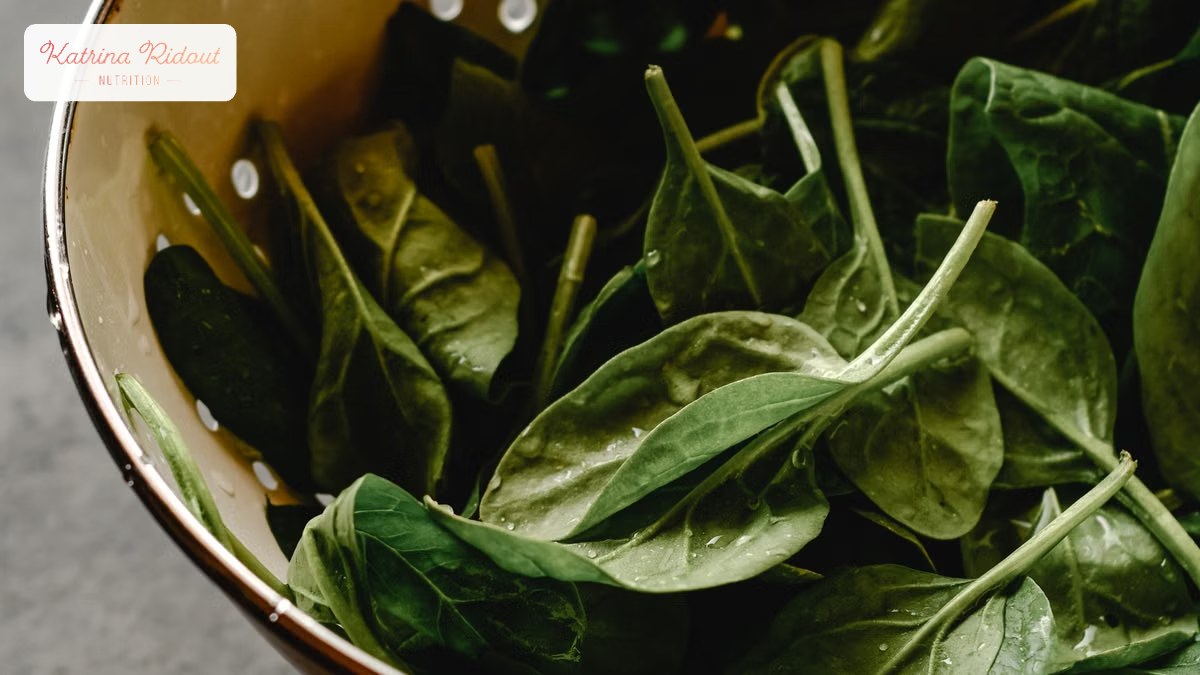
Leafy greens like spinach quietly cover most of your vitamin K needs.
Major dietary sources of Vitamin K
K1: Phylloquinone
Found in plant foods:
- Green leafy vegetables (kale, spinach, salad greens, cabbage, broccoli, Brussel sprouts)
- Plant oils (canola, soybean, olive)
K2: Menaquinone
Found in animal products and fermented foods, and also produced by gut bacteria:
- Cheese
- Full-fat dairy
- Meat (pork, chicken)
- Egg yolk
- Natto, miso, sauerkraut
How much Vitamin K do I need?
The recommended adequate intake for vitamin K is 60ug/ day for all women, non-pregnant, pregnant and lactating. No additional amount in pregnancy has been recommended, and no upper limits for vitamin K have been set.
Vitamin K Deficiency
The precise role of vitamin K during pregnancy is largely unknown, especially that of K2, however it is well recognised that overall vitamin K deficiency is associated with an increased risk of haemorrhage and can be critical for pregnant women and especially newborns during birth.
Main Takeaways about Vitamin K
- Vitamin K plays a key role in blood clotting and cardiovascular and bone health in both mother and baby
- Babies require a vitamin K injection at birth to restore depleted levels and protect against haemorrhage
- Vitamin K1 is found in plant sources, and K2 is found in animal sources and fermented foods, however the majority of a person’s intake comes from plant foods
- Consult your health care professional before starting supplementation, especially if taking anticoagulants or antibiotics

A short consult can sort out which nutrients actually need your attention.
How Kat Ridout can help
At Katrina Ridout Nutrition, we understand the importance of Vitamin K as well as various other important nutrients. Because of this, we can help to ensure you are meeting all your nutritional needs.
For more nutrition support or to book in for a comprehensive individualised nutrition consultationto optimise your health, be sure to get in touch with Kat Ridout here.
If you would like this looked at alongside the rest of your pregnancy nutrition, that is the everyday work of a pregnancy dietitian, in Brisbane and by telehealth across Australia.