
If you’re trying to conceive, chances are your feed has quietly filled up with gut-health content. Microbiome testing kits. Probiotic “fertility stacks.” Thirty plants a week challenges. Gut resets. It’s a lot — and when you’re already carrying the emotional load of TTC, the last thing you need is another list of rules you’re apparently getting wrong.
So let’s take a breath together, and I’ll share what the research actually says — and what I’d gently suggest instead of an expensive overhaul.
What the science says (honestly)
The gut microbiome — the trillions of microbes living in your digestive system — is one of the most exciting areas in nutrition research right now, and that includes reproductive health. Researchers are exploring how the gut may interact with hormones, nutrient absorption and the body’s inflammatory balance, all of which matter in the preconception window.
But here’s the honest bit you won’t see in the ads: this research is still emerging. We don’t yet have evidence that changing your gut bacteria will improve your chances of conceiving, and anyone promising that is ahead of the science. What we do know with confidence is that the eating patterns that support a healthy gut — plenty of plant variety, fibre, and everyday fermented foods — are the same patterns that support your overall health while you’re trying to conceive. That’s a lovely two-for-one, with no gimmicks required.
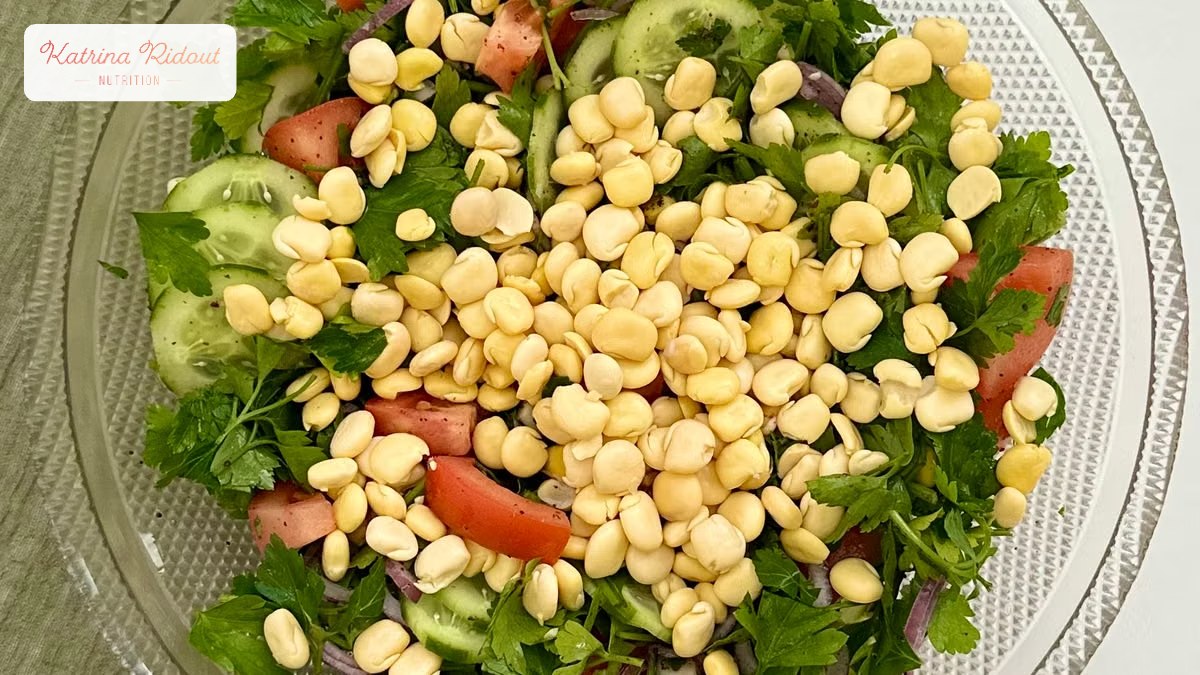
A bowl full of colour is one of the kindest things you can do for your gut.
Start with colour, not perfection
The single most supported idea in gut health is beautifully simple: your gut microbes thrive on variety, especially plant variety. Different vegetables, fruits, wholegrains, legumes, nuts and seeds each feed different microbes.
In the middle of a Brisbane winter, that doesn’t need to mean cold salads. Think roasted pumpkin and chickpeas through a warm couscous, a lentil and vegetable soup, extra veg stirred through a slow-cooked casserole, or a handful of frozen peas and corn thrown into almost anything. Frozen and tinned vegetables absolutely count — they’re picked at their peak and they make variety achievable on tired weeks.
If counting “30 plants a week” feels motivating, lovely. If it feels like homework, please let it go. “A little more colour than last week” is a perfectly good goal.
Fibre: the quiet achiever
Fibre is what most of our gut microbes actually eat, and most Australian women get less than recommended. Gentle ways in: swap to wholegrain or seeded bread, add a tablespoon of chia or linseed to your porridge, keep the skin on your potatoes and apples, and let legumes sneak into soups and bologneses. Small, boring, brilliant — and if your tummy is sensitive, build up slowly and be kind to yourself along the way.
Fermented foods, without the fuss
Everyday fermented foods — yoghurt, kefir, sauerkraut, kimchi, miso — are a lovely, food-first way to bring friendly microbes to the table. A dollop of yoghurt on your porridge or a small glass of kefir is plenty; nothing exotic required. If dairy isn’t your thing, there are options we can chat through together.
What I’d gently skip
Expensive microbiome tests and big probiotic supplement stacks bought off social media. Not because supplements never have a place — sometimes they genuinely do — but because they should be chosen for you, based on your health history and your bloods, ideally with your GP or dietitian alongside you. Please don’t spend hundreds of dollars because an influencer told you to.

Gentle, unhurried changes tend to be the ones that last.
The kindest takeaway
Your gut doesn’t need to be perfect for you to be “doing TTC right.” A bit more colour, a bit more fibre, some everyday fermented foods, and a lot less pressure — that’s a gut-friendly, fertility-friendly, you-friendly place to start.
If an IVF cycle is part of your plan, this is the same groundwork I start from as an IVF dietitian in Brisbane.
And if the wellness noise has left you unsure what actually applies to your body, I’d love to help you untangle it. I offer a free 15-Minute Investigative Callback — a no-pressure chat about where you’re at and whether working together makes sense. You can book a time here: Book your free 15-Minute Investigative Callback
Kat xx
Accredited Practising Dietitian (APD)
These conversations happen just as easily by telehealth. There is a version of this for readers in South Australia on the Adelaide fertility and pregnancy page, and for readers in Western Australia on the Perth page.
Gut health is one part of a wider picture. You can read more about how I work with women on preconception and fertility nutrition as a fertility dietitian in Brisbane, with telehealth right across Australia.