Nearly every pregnant woman I speak with has been told some version of the same thing. You are growing a person, so of course you are tired. That is fair, and often it is the whole story. But there is a kind of tired that sits underneath the ordinary kind, and low iron is one of the more common reasons for it.
Everyone says tired is just part of pregnancy
The tiredness worth paying attention to is the one that does not lift after a decent night of sleep. It tends to arrive with breathlessness on stairs you managed easily a month ago, a heart that races when you stand up, cold hands, headaches, or a fog that makes small decisions feel heavy. Some women notice their mood flattens. Plenty of women put all of it down to being pregnant and never mention it at an appointment.
It is worth mentioning. Low iron is one of the most common nutritional issues in Australian pregnancies, and it is also one of the more fixable ones.
Why iron gets harder when you are pregnant
Your blood volume rises substantially through pregnancy, and your body needs iron to build the extra red blood cells that come with it. Your baby is building their own stores for the first months of life at the same time, and they take what they need first.
On top of that, the Australian Nutrient Reference Values put the recommended intake for iron in pregnancy at around 27 milligrams a day, up from 18 milligrams for most women beforehand. That is a real jump, and it lands at exactly the point when many women are eating less because of nausea. None of this is a failure on your part. It is arithmetic.
Ferritin is the number worth asking about
Here is the part that surprises people. Haemoglobin, the number most of us think of as the iron test, is a late signal. Your body will run down its stored iron for a long time before haemoglobin falls far enough to be called anaemia. So you can feel flat, foggy and breathless while your results still read as normal.
Ferritin measures those stores, and it drops first. Australian maternity care increasingly checks ferritin early in pregnancy and again later on, because it gives a much earlier picture. If you are exhausted and have only ever had a haemoglobin result, it is completely reasonable to ask your GP or midwife whether your ferritin has been looked at.
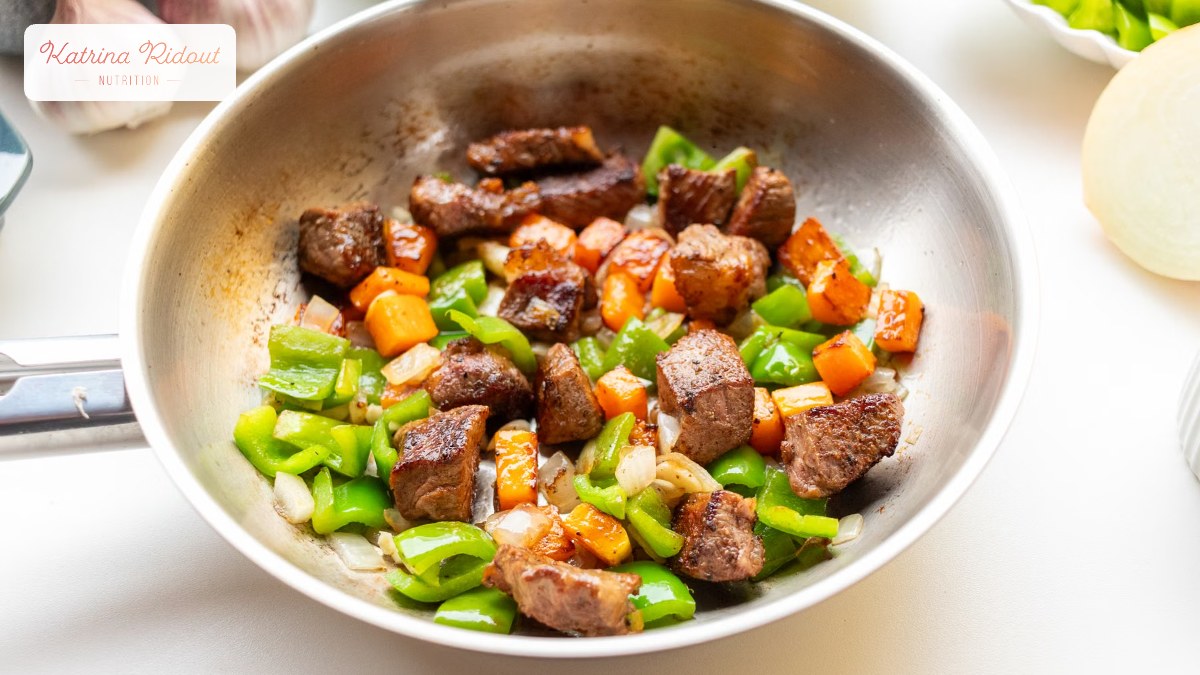
Meat and vegetables together does more for your iron than either on its own.
There are two kinds of iron, and your body treats them differently
Iron from animal foods, called haem iron, is absorbed far more readily. Red meat is the richest source, with chicken, fish and eggs contributing as well. Iron from plant foods, called non haem iron, sits in legumes, tofu, wholegrains, nuts, seeds and green vegetables. Your body absorbs a much smaller fraction of it.
This is where the spinach story falls down. Spinach does contain iron, but it is the non haem kind, and spinach also contains compounds that bind to it on the way through. A big bowl of it is a lovely thing to eat and a poor plan for rebuilding iron stores on its own.
If you eat little or no meat, plant iron can absolutely do the job. It just needs a bit more thought about how much you are getting and what you put beside it.
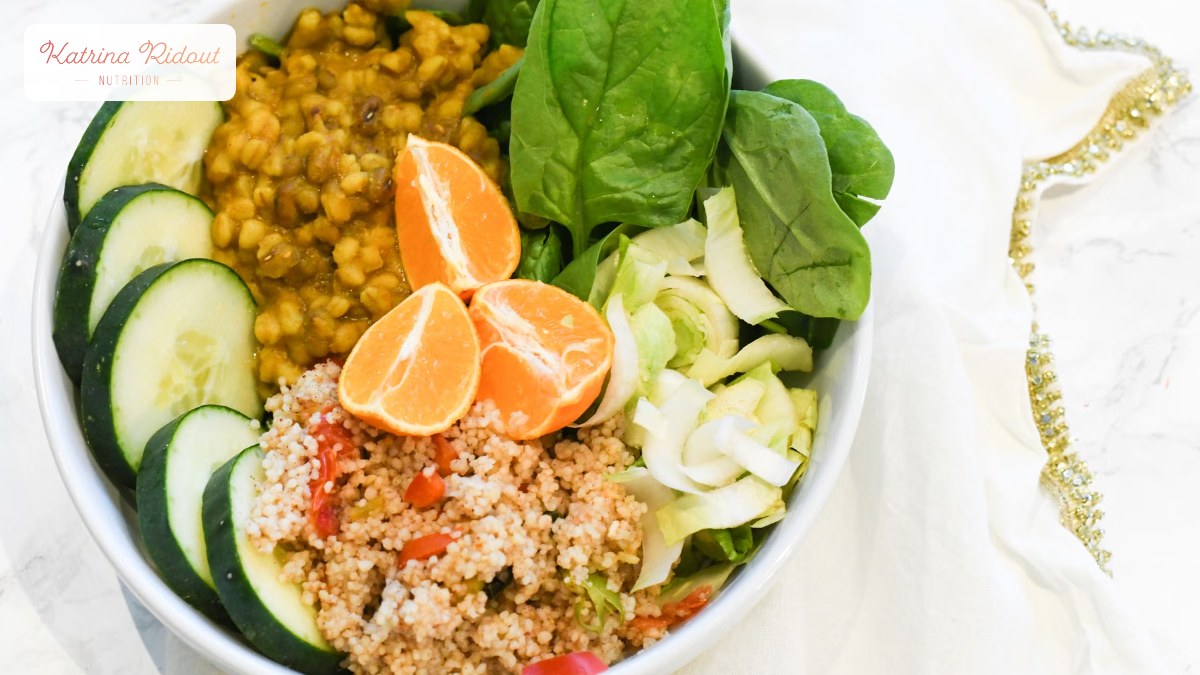
Vitamin C beside plant iron is one of the easiest wins there is.
Small things that change how much iron you actually absorb
Vitamin C is the useful one. Eating something rich in it alongside plant iron lifts absorption meaningfully. That might be tomato through a lentil dish, capsicum in a stir fry, a squeeze of lemon over greens, or a piece of fruit with your breakfast cereal.
Tea and coffee work in the other direction. The tannins in both bind iron and reduce how much you take up, and the effect is strongest when you drink them with the meal rather than away from it. You do not need to give up your cuppa. Moving it to between meals is usually the whole fix.
Calcium competes with iron too, so a large glass of milk alongside your main iron meal of the day is not doing you many favours. Spread across the day, both are fine.
Where supplements fit, and where I do not
Whether you need an iron supplement, which form, and for how long, is a decision for your GP, midwife or obstetrician based on your actual blood results. Too much iron is not harmless, and the right answer differs a great deal between women. I do not prescribe it, and I would be cautious about anyone who does so from a social media post.
What I do is the rest of it. I look at what you are managing to eat, what your body is doing with it, and how to make the food side work around nausea, aversions, reflux, a busy household or a first trimester where nothing appeals. I also help make sure that whatever your doctor has recommended is actually being absorbed rather than passing through with your morning coffee. My work sits alongside your medical team, never in place of it.
If this sounds like your last few weeks
Being tired in pregnancy is normal. Being wiped out, foggy and breathless is worth a conversation. Talk to your GP or midwife about your iron studies, and if you would like help with the food side of it, I offer a free 15 minute call where we can work out together whether that would be useful for you. You can book a time here.
If you would like someone to look at the whole picture with you, that is what working with a pregnancy dietitian involves. Appointments run by telehealth right across Australia, from Brisbane.
Kat xx
Accredited Practising Dietitian (APD)
Iron is one of the things worth reviewing properly rather than guessing at. Women in Western Australia can read how this works over telehealth on the Perth pregnancy and fertility page, or in the longer article on pregnancy and IVF nutrition in Perth.