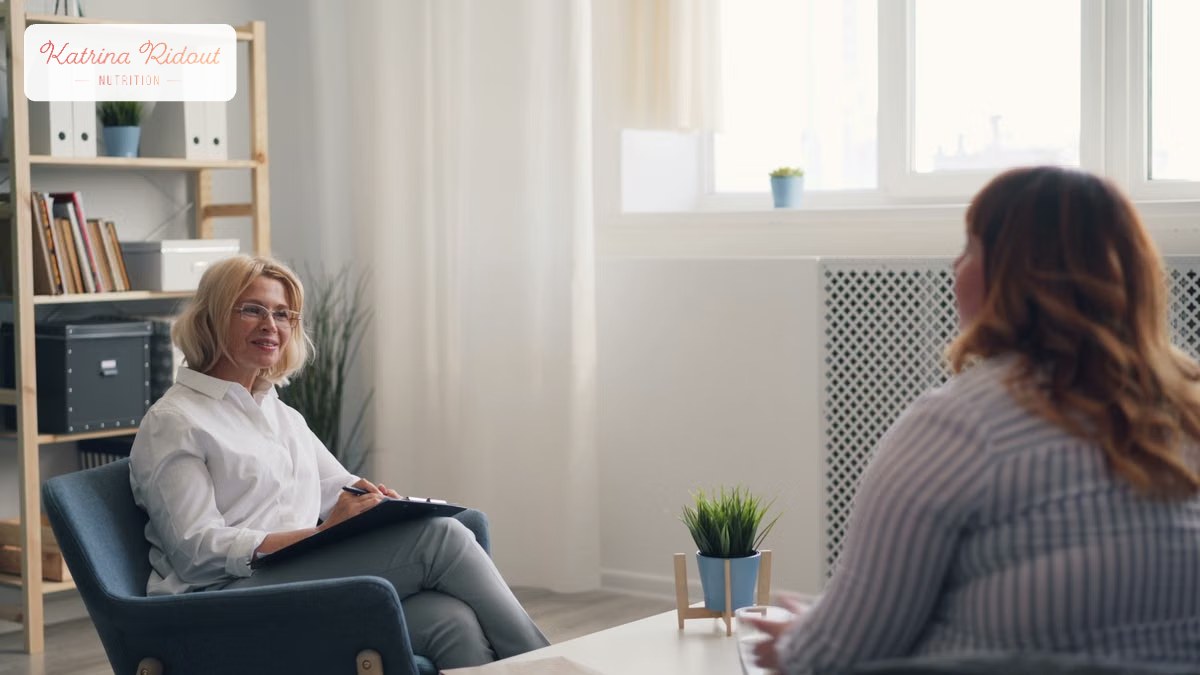
If you live on the Sunshine Coast and you’re trying to get pregnant, you don’t have to drive down the Bruce Highway every few weeks to get fertility nutrition support. I see women from Caloundra, Noosa and the hinterland by telehealth, and if you’d rather sit across the table from me, I’m in Milton in Brisbane. I guess the key thing is finding a dietitian who fits how you live, and who works with your GP and fertility clinic, not around them.
By Katrina Ridout, Accredited Practising Dietitian (APD), Brisbane. Reviewed October 2026.
Table of Contents
- What does a fertility dietitian actually do?
- What does the evidence say about diet and fertility?
- Can you see a fertility dietitian on the Sunshine Coast without travelling to Brisbane?
- How to choose a fertility dietitian on the Sunshine Coast
- How is fertility nutrition tailored for IVF versus natural conception?
- How does a dietitian's approach differ from a naturopath's for fertility?
- How I work with you
- Key Takeaways
- References
What does a fertility dietitian actually do?
A fertility dietitian reviews your overall eating pattern, looks at your blood results and supplements, and coordinates with your medical team during preconception and fertility care. An Accredited Practising Dietitian (APD) is university-trained in nutrition and dietetics and is held to the professional standards of Dietitians Australia, so the advice you get is grounded in evidence rather than trends.
Dietitians look at patterns rather than single hero foods. The research on diet and fertility is largely observational, so the focus sits on what you eat most days, not on one miracle ingredient. A balanced eating pattern is associated with better ovulatory function, egg and sperm quality and early pregnancy health.1
What does the evidence say about diet and fertility?
Research points toward overall eating patterns rather than isolated foods. A Mediterranean-style pattern, rich in vegetables, legumes, wholegrains, fish, nuts and extra virgin olive oil, is the one most often linked with fertility in the studies we have.1
The nutrients that come up again and again are folate, omega-3 fats, iodine and iron. Folate supports early neural development, which is why a folic acid supplement is recommended for at least one month before conception and through the first trimester.2 Omega-3 fats come from oily fish, and leafy greens, legumes, nuts, seeds and berries round out the picture. The Australian Dietary Guidelines are a good baseline diet to build from.3
The evidence shows associations, not promises. No single food or supplement can make a pregnancy happen. What the research does suggest is that a varied, nutrient-dense way of eating gives your body a solid foundation while you work with your fertility clinic and GP.
Can you see a fertility dietitian on the Sunshine Coast without travelling to Brisbane?
Yes. Telehealth makes fertility nutrition support available Australia-wide, including the Sunshine Coast, Caloundra, Noosa and the hinterland towns. You get the same individual care you would in person, without leaving home.
A telehealth consult is simple: we meet by telehealth, talk through your health and fertility history, look at your current eating and supplements, and agree on a practical plan. Pyjama pants are welcome. We see and hear each other, but you can leave your Ugg boots on.
Some women on the Sunshine Coast prefer to come down to Brisbane for an in-person appointment, and that works too. Either way, the support is the same and it sits alongside your fertility clinic's care.
How to choose a fertility dietitian on the Sunshine Coast
- The APD credential. Check that the person is an Accredited Practising Dietitian. You can search for one through Dietitians Australia.4
- Experience in preconception and fertility. Ask whether they regularly support women trying to conceive, going through IVF, or after a loss.
- Familiarity with your conditions. PMOS (previously called PCOS), endometriosis and thyroid conditions all change the nutrition conversation.5
- They work with your doctors. A good fit keeps your GP and fertility specialist in the loop and writes back to them.
- Telehealth or in person. Choose the format you will actually keep up with. Consistency matters more than the room you sit in.
- Medicare. Ask your GP whether you are eligible for a Chronic Condition Management Plan. A Medicare rebate may be available for eligible patients on a GP Chronic Condition Management Plan.
How is fertility nutrition tailored for IVF versus natural conception?
IVF preparation nutrition sits alongside your fertility clinic's care and focuses on the months before a cycle, plus support during it. The goal is to build a solid nutritional foundation before treatment begins, then keep it steady while your medical team leads the cycle.
Natural conception support tends to focus on overall eating patterns, cycle regularity and key nutrients over a longer window. It takes about three months to build your eggs, so that runway is worth using well.
An individual supplement plan is part of the work in both paths. Doses should be set with your dietitian or GP rather than taken from forums or comment threads. What suits one person may not suit another, and some supplements interact with medications or medical conditions.
How does a dietitian’s approach differ from a naturopath’s for fertility?
A dietitian's approach is evidence-based nutrition assessment, a food-pattern focus and coordination with your medical care. An APD reviews what you actually eat, identifies gaps, and makes practical changes that fit your life. The work sits alongside your GP and fertility clinic, not outside them.
Naturopathy may include herbal medicine and other tests or therapies where the evidence is limited, and these are not a substitute for medical fertility care. Whoever you see, ask about their qualifications and the evidence behind their recommendations, and keep your GP and fertility clinic informed about any supplements or herbs you take, because some can interact with fertility medications or affect hormone levels.
How I work with you
At your first appointment I look over everything: your blood results, your supplements and what you eat on a normal day. Arm me with as much information as you want to arm me with. A care plan, recent bloods and photos of your supplement bottles are perfect, and the rest can follow. No stress.
Then we add before we subtract. Most women I see don't eat badly, they are just missing a few key things, so we find two or three nutrition gaps and make simple little switches that fit your week. You get a written plan, and we review in a few weeks. If it's not working, we tweak it.
I see women in person at Milton Village Medical, Level 1, 36 Baroona Road, Milton QLD 4064, and by telehealth anywhere in Australia, including the Sunshine Coast. I keep your GP and fertility specialist in the loop so we are all pulling in the same direction.
If you'd like to chat about whether I'm the right fit for you, call 1300 640 104 or book a time on this site. Don't be a stranger.
Key Takeaways
- A fertility dietitian is an Accredited Practising Dietitian who supports preconception nutrition alongside your GP and fertility clinic, not instead of them.
- Sunshine Coast residents can see a fertility dietitian by telehealth, or in person in Brisbane.
- Research links a balanced, Mediterranean-style eating pattern with fertility, with folate, omega-3 fats, iodine and iron among the key nutrients.
- When choosing a dietitian, look for the APD credential, fertility experience and someone who works with your doctors.
- A Medicare rebate may be available for eligible patients on a GP Chronic Condition Management Plan.
- This is general information, not individual advice. Nutrition supports your fertility care and does not replace medical or fertility-clinic treatment.
References
- Gaskins AJ, Chavarro JE. Diet and fertility: a review. American Journal of Obstetrics and Gynecology. 2018. doi:10.1016/j.ajog.2017.08.010
- Pregnancy, Birth and Baby (Australian Government). pregnancybirthbaby.org.au
- National Health and Medical Research Council. Australian Dietary Guidelines. eatforhealth.gov.au
- Dietitians Australia. Find an Accredited Practising Dietitian. dietitiansaustralia.org.au
- Jean Hailes for Women's Health. jeanhailes.org.au